Working as part of the exhibit design team at FifeX Ltd, I was responsible for the electronics and control systems across two interactives installed at the National Mining Museum Scotland, near Edinburgh.
Both exhibits are hands-on and physics-driven — designed to let visitors experience real scientific principles through direct interaction rather than just reading about them.
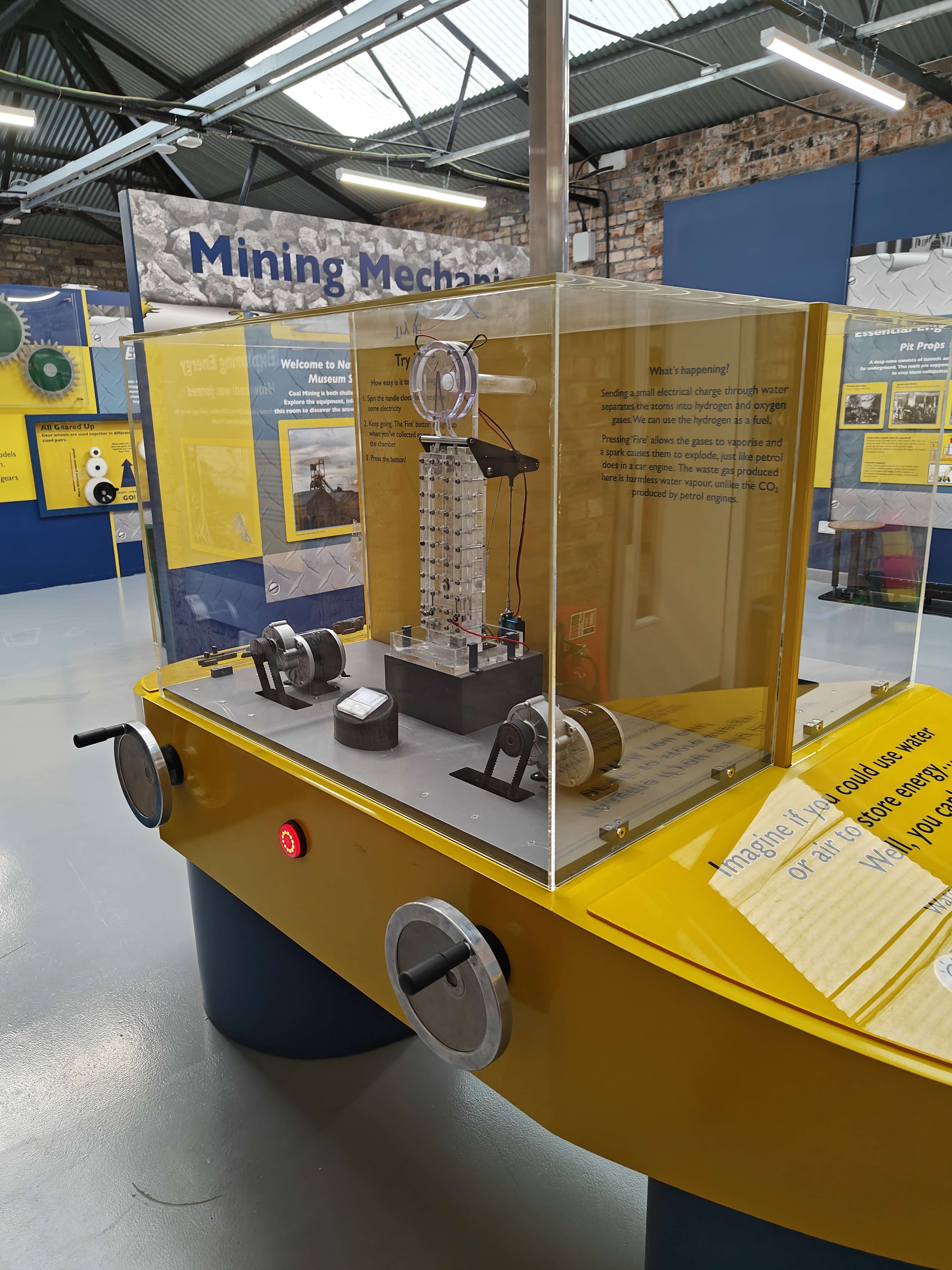
This interactive demonstrates the science of electrolysis in a visceral, satisfying way. Two handles are each connected to alternators — as the visitor turns them, they generate electricity which passes into a liquid compound, splitting it into its two component gases: hydrogen and oxygen. Both are entirely harmless in the small quantities produced here, and visitors can watch the bubbles forming in real time as pressure builds inside a sealed container.
Once enough gas has accumulated and the pressure crosses the lower threshold, a button illuminates to signal the visitor to act. On press, a servo releases a retaining bar — and a taser module simultaneously ignites the hydrogen, producing a sharp, dramatic pop. The whole sequence from cranking to ignition makes the chemistry immediate and memorable.
Turn the handles — alternators generate electricity fed into the liquid compound, splitting it into hydrogen and oxygen.
The gases build pressure inside the sealed container. Watch the bubbles form as it fills.
Once pressure is sufficient, the button flashes. Press it — a servo releases the seal and a taser ignites the hydrogen.
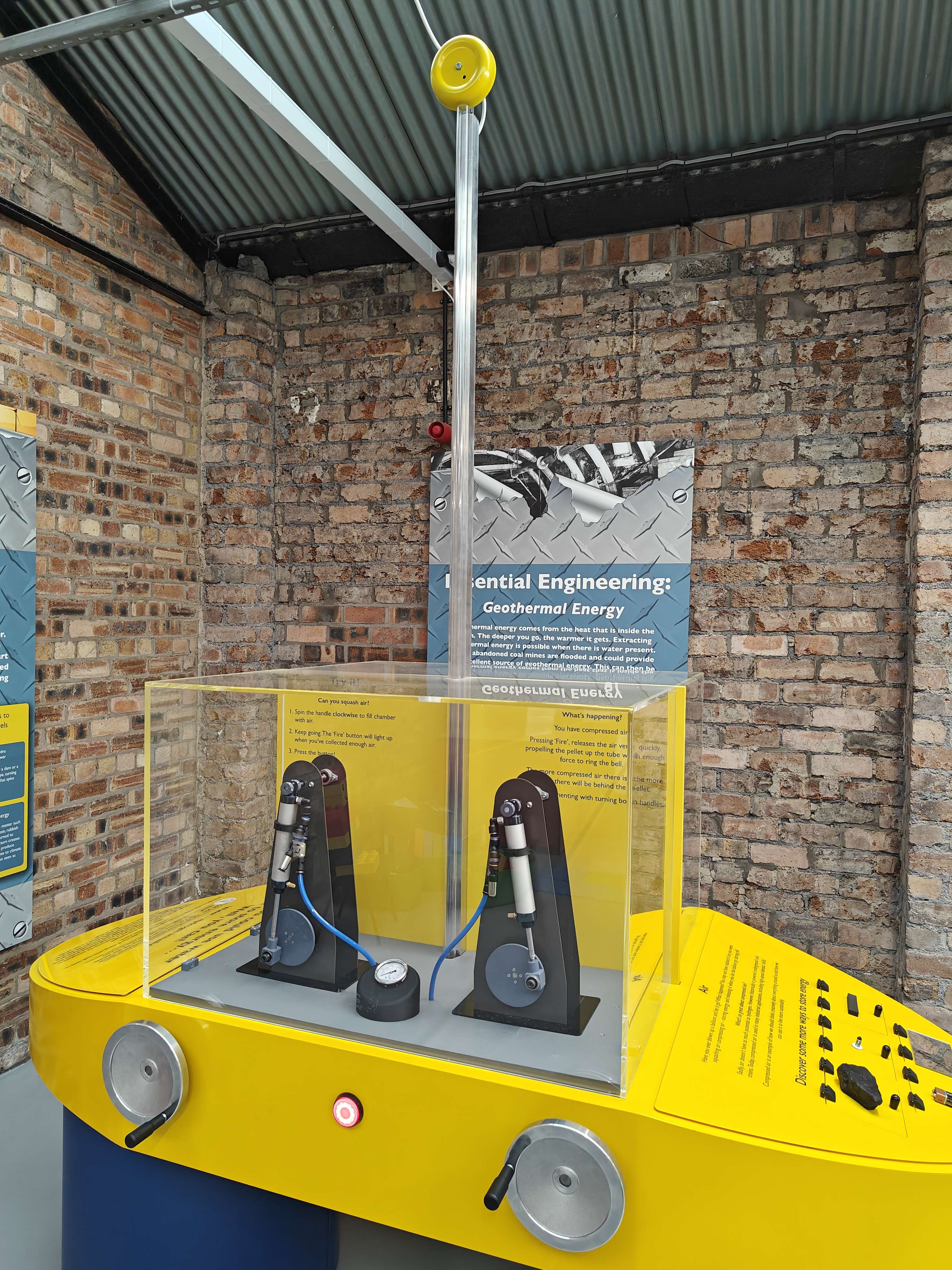
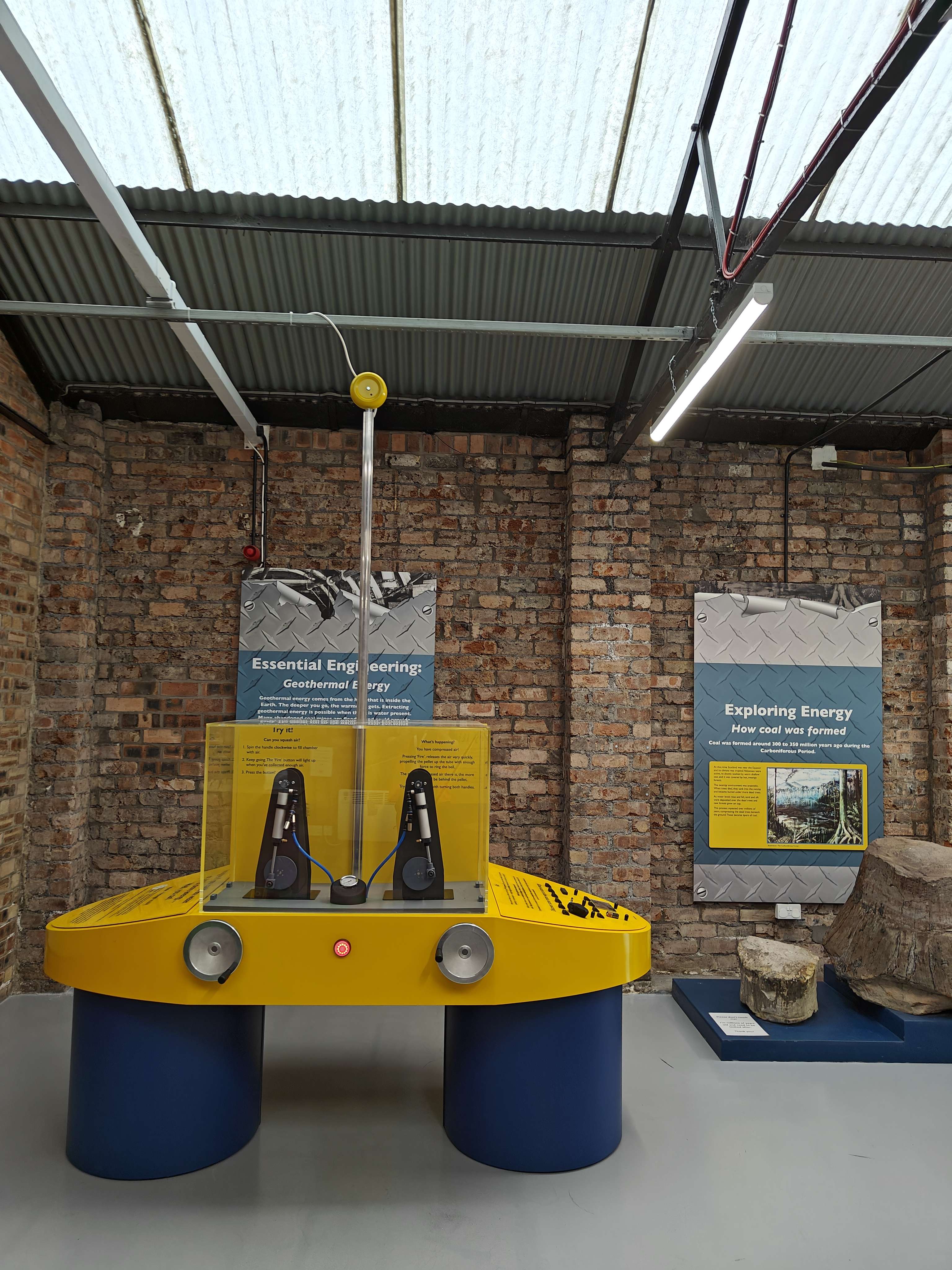
This interactive puts the visitor in direct control of a pneumatic system. Two large handles are each connected to a pneumatic pump — pumping them compresses air into a storage tank, with the pressure displayed live on a gauge so visitors can see their effort building up in real time.
Once sufficient pressure is stored, the visitor presses a button to fire a slug up a vertical shaft towards a bell at the top. If they've pumped enough, the slug travels the full distance and rings the bell — a clear, rewarding payoff that makes the physics of compressed air tangible and fun.
Pump both handles — each drives a pneumatic pump, compressing air into the tank.
Watch the pressure gauge rise. The more you pump, the more energy is stored.
Press the button to fire — if there's enough pressure, the slug travels the shaft and rings the bell.
Both interactives were produced as part of my full-time employment with FifeX Ltd (Scotland). Working alongside a team of exhibit designers who handled the drawings, panelling and graphics, I was responsible for designing and building the complete electronic and electromechanical control systems for both exhibits.
Both interactives are currently installed inside the National Mining Museum Scotland at the Lady Victoria Colliery, Newtongrange — one of the best-preserved Victorian pit sites in Europe.